
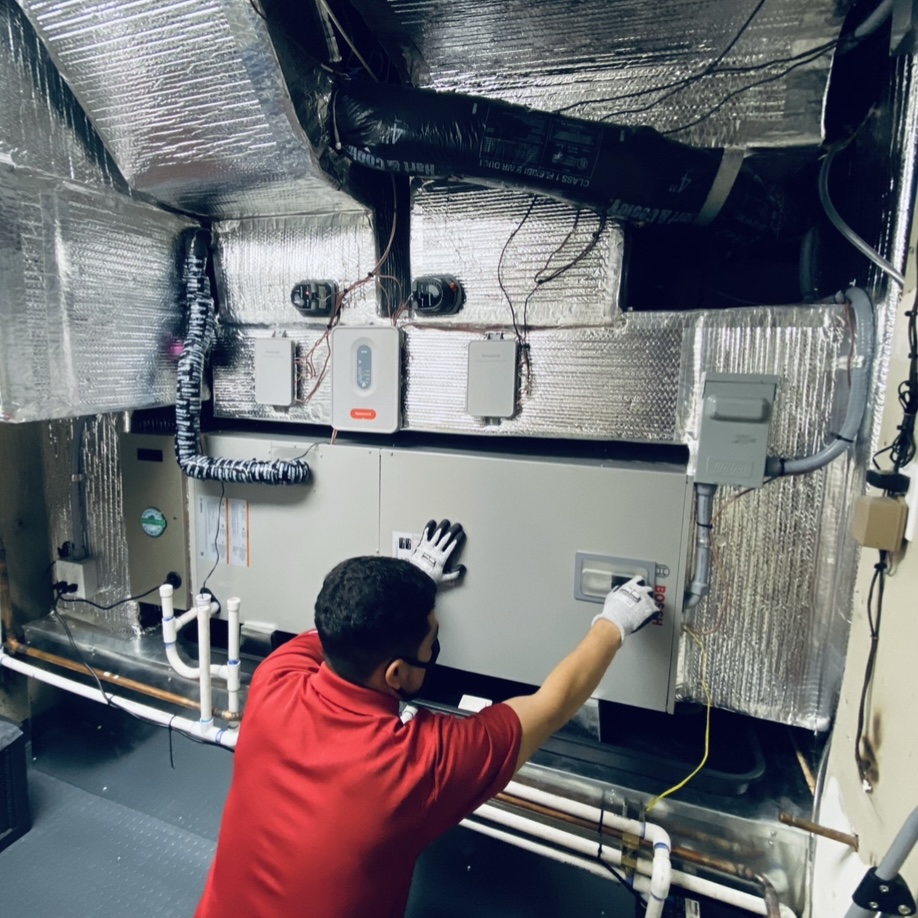
When your AC stops keeping up during a Sacramento summer, or your furnace starts acting up when you need it most, the question comes up fast: do you fix it again, or is it finally time to replace the whole thing? It's one of the most common calls we get from homeowners across Rancho Cordova, Sacramento, Folsom, Citrus Heights, and the surrounding areas.
There's a simple rule of thumb that can help you cut through the guesswork. It's called the $5,000 rule, and once you understand it, the decision usually becomes a lot clearer.
What Is the $5,000 Rule for HVAC?
The $5,000 rule is a quick calculation you can do before calling anyone:
The formula: Take your HVAC system's age (in years) and multiply it by the cost of the repair you've been quoted. If the number comes out above $5,000, you're generally better off replacing the system than putting money into it.
Here's a real-world example. Say your system is 11 years old and a technician tells you the repair will run $600. That's 11 x $600 = $6,600. According to the rule, that's a system that probably deserves to be replaced rather than patched up again.
On the other hand, if your system is only 5 years old and the repair is $400, that's $2,000. Way under the threshold. In that case, repairing it makes much more sense.
It's not a perfect rule, but it's a genuinely useful starting point, especially if you're not sure whether a contractor is steering you in the right direction.
Why This Rule Matters More in Sacramento
Sacramento summers are brutal on HVAC equipment. We're talking about weeks at a time over 100 degrees, and systems here work a lot harder than they would in a milder climate. That extra load shortens lifespan and accelerates wear on compressors, capacitors, and blower motors. If you've had repeated AC problems in Rancho Cordova over the past couple of summers, it's worth paying attention to the pattern, not just the latest repair.
We've also found that homeowners in Sacramento tend to underestimate how much they're spending on repairs over time. One $400 fix here, another $500 there, and suddenly you've put $1,500 into a system that's still one bad summer away from leaving you without AC. The $5,000 rule helps you see the bigger picture.
Other Factors Worth Considering
How Old Is Your System?
Most HVAC systems have a lifespan of 10 to 15 years, though AC units in Sacramento often age faster than the national average because of how hard they run from May through October. If your system is 12 years old or older, even a modest repair cost can push you past the $5,000 threshold.
What Are Your Energy Bills Doing?
Old systems lose efficiency as they age. If your SMUD bill has been creeping up every summer even though your usage hasn't changed much, your system is probably working harder than it should to deliver the same cooling. A new high-efficiency system can make a real difference in your monthly costs, and SMUD rebates in Rancho Cordova can reduce the upfront cost of qualifying equipment.
How Often Has It Needed Repairs?
One repair in five years is different from three repairs in two years. If you're calling for service regularly, the cost of those AC repairs in Sacramento can add up fast. A running total of repair costs is something we always recommend keeping track of.
Is Your Home Actually Comfortable?
Aging systems often struggle to maintain consistent temperatures throughout the house. If you've got hot spots upstairs, rooms that never quite cool down, or a system that runs constantly without catching up, those are signs that it's not just broken, it's undersized or worn out beyond what repairs can fix. A fresh AC installation in Rancho Cordova can make a noticeable difference in how evenly your home cools.
What Does a Replacement Actually Cost in Sacramento?
This is the question most homeowners want answered before they make a decision. A full system replacement in the Sacramento area typically falls between $6,000 and $14,000 installed, depending on the size of your home, the type of system, and the efficiency rating you choose. A 1,500-square-foot home usually lands somewhere in the $6,500 to $10,000 range.
That sounds like a lot until you factor in what's available to offset the cost. SMUD rebates for qualifying heat pumps and high-efficiency central AC systems can bring hundreds of dollars back, and the federal Inflation Reduction Act offers a tax credit of up to $2,000 for qualifying heat pump installations. You can claim both on the same job, which changes the math significantly.
If you're trying to figure out the best time to replace your HVAC system in Sacramento, late fall or winter tends to be the most cost-effective window. Contractors are less slammed, equipment is more available, and you'll have the new system dialed in before summer hits.
Repair or Replace? We Can Help You Figure It Out
We work with homeowners throughout Rancho Cordova, Sacramento, Folsom, Citrus Heights, Fair Oaks, Carmichael, Arden-Arcade, and North Highlands. When you call us, we give you a straight answer, not a sales pitch. We'll inspect your current system, tell you honestly where it stands, and walk you through both options so you can make the call that's right for your budget and your home.
If your system needs AC repair in Rancho Cordova or a full replacement, we handle both. Same goes for heating. Our heating services in Rancho Cordova cover repairs, maintenance, and new installations. And if you want to skip the back-and-forth, you can always start with our instant HVAC quote tool to get a ballpark before we even pick up the phone.
Not Sure Whether to Repair or Replace? Let's Talk.
We serve Sacramento, Rancho Cordova, Folsom, Citrus Heights, and the surrounding area. Get a free, honest assessment from a licensed technician.
Call (916) 616-3115 for a Free QuoteFrequently Asked Questions
What is the $5,000 rule for HVAC?
The $5,000 rule is a simple guideline for deciding whether to repair or replace your HVAC system. Multiply your unit's age (in years) by the cost of the repair being quoted. If the result is over $5,000, replacing the system is usually the smarter financial move. For example, a 10-year-old unit facing an $800 repair comes out to $8,000, which suggests replacement is worth a serious look. This rule is especially relevant in Sacramento, where summer heat pushes aging systems to their limits year after year.
How much does a new HVAC system cost in Sacramento?
A new HVAC system in the Sacramento area typically costs between $6,000 and $14,000 installed, depending on the size of your home, the type of system (split system, packaged unit, heat pump), and the efficiency rating. Homes around 1,500 square feet usually land in the $6,500 to $10,000 range. SMUD rebates and federal tax credits can lower that cost significantly for qualifying equipment.
Can I get rebates or tax credits on a new HVAC system in Sacramento?
Yes. SMUD customers in Sacramento and Rancho Cordova can qualify for rebates on high-efficiency heat pumps, central AC systems, and smart thermostats. On top of that, the federal Inflation Reduction Act offers a tax credit of up to $2,000 for qualifying heat pump installations. These two incentives can often be stacked together, which makes the decision to replace an aging system a lot easier financially.
What efficiency standards do new HVAC systems need to meet in 2026?
As of 2023, the Department of Energy updated its minimum efficiency standards for HVAC equipment. New air conditioners and heat pumps sold in California must meet higher SEER2 ratings than older equipment. If your current system is from before 2015, it almost certainly falls short of today's standards. Upgrading to a modern system not only meets current rules but can meaningfully reduce your electricity bills during Sacramento's long cooling season.
Will homeowners insurance cover HVAC replacement in Sacramento?
Standard homeowners insurance typically does not cover HVAC replacement from normal wear and tear or age-related failure. If your system is damaged by a covered event, such as a fire, a fallen tree, or storm damage, your policy may cover some or all of the cost. For everything else, the expense falls on the homeowner. That's exactly why knowing when to replace versus repair matters so much, replacing before a total failure gives you more options and more time to plan.



